


Vone: Live, Video Party & Fun
4.480.00 Reviews
App Specs
- Version
- 1.3.3.543.0805
- Updated On
- License
- Free
- Downloads
- 5,000,000+
- Developer
- Vone Team
- Categories
- Social
- Platform
- Android
Screenshots
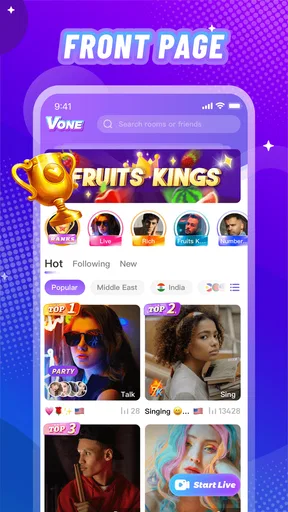

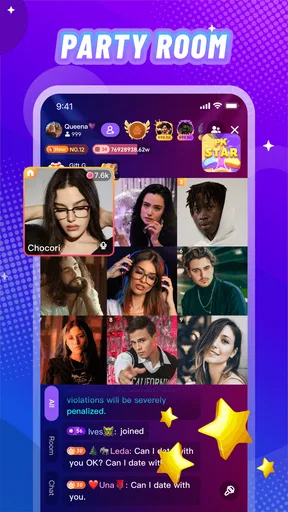
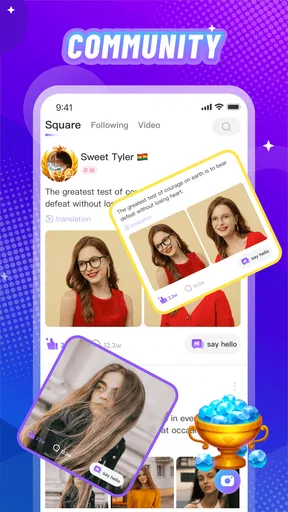

 Analysis by AppCompare
Vone: Live, Video Party & Fun is the kind of social app I would open when ordinary messaging feels too quiet and I want a more immediate way to meet people, watch live activity, and join a casual conversation. My overall impression is positive, but with an important qualification: it works best for adults who enjoy spontaneous social discovery, not for anyone looking for a calm, private replacement for a conventional messenger.
Developed by Vone Team, this free social app has built a sizeable audience, with more than five million installs and an average rating of 4.4 from roughly twenty-four thousand ratings. Those figures suggest that its live, video-focused approach has found a real audience. In my experience, the appeal is less about one single feature and more about the feeling of dropping into an active room where something may be happening right now.
How the live social experience feels in everyday use
The first thing I noticed is that Vone encourages participation rather than passive scrolling. A normal social feed lets me read, react, and leave. A live social app asks me to decide whether I want to enter a conversation, watch people interact, or make myself visible. That small change makes the experience feel more immediate, but it also means the app rewards users who are comfortable with unpredictability.
The video-party angle gives the service a more energetic personality than a text-first network. Instead of carefully composing a message and waiting for a reply, I can look for a moment that already has momentum. This is useful when I have a short break and want human interaction without arranging a call in advance. It is also why the app can feel less predictable than a standard chat service: the quality of the experience depends heavily on who is active at the time.
I would describe Vone as a place for lightweight social discovery. It is not the app I would choose to organize a work project, keep a long record of family conversations, or maintain a carefully controlled circle of close friends. Its strength is the present moment. The best sessions are the ones where I join with modest expectations and find an entertaining exchange quickly.
Why the live format can be more engaging than ordinary chat
Live interaction removes some of the pressure that comes with writing the perfect message. In a regular messaging app, an unfamiliar person may hesitate because the conversation has to begin from nothing. In a live environment, there is already a topic, a host, or a group dynamic to respond to. That context makes it easier to decide whether I want to stay.
There is also a useful difference between watching a live social moment and watching polished entertainment. Vone feels oriented toward participation and contact rather than a finished broadcast. That makes it more personal, although it also makes the experience uneven. Some rooms will be lively and welcoming; others may not offer much reason to remain.
Worth Reading Before You Choose

EA SPORTS FC Mobile 26 Is a Bigger Football Game, but It Takes Time

Flipboard Shows What News Apps Must Do Beyond the Feed

Switching to Android Auto Means Rethinking Your Driving Routine

Google Calendar Makes a Crowded Week Easier to Manage

Ludo King Makes the Most of the Minutes Between Plans

Baby Panda World Brings Quick Play to Modern Phones, but Its Game Library Feels Busy
One practical habit improved my experience: I treated each session as a short visit instead of assuming I had to stay. If a room did not suit me after a few moments, leaving and trying another one was more sensible than forcing the conversation. This sounds obvious, but it matters in live apps because the first room shown is not necessarily the best match for my mood.
A realistic way to use it during a normal day
Imagine finishing a commute or waiting for an appointment with fifteen minutes to spare. I might open Vone, browse the live activity, and enter a room that appears relaxed rather than crowded or overly intense. I can listen first, decide whether the tone suits me, and then participate if I feel comfortable. That is a more realistic use case than expecting the app to create a lasting friendship every time it opens.
For someone who works remotely or spends a lot of time alone, this kind of brief social contact can be appealing. It does not require scheduling, and it can provide a sense of presence that a silent feed cannot. At the same time, I would not use it as a substitute for dependable relationships. A spontaneous room can brighten an evening, but it cannot guarantee continuity or emotional depth.
Another useful workflow is to use the app when I have a specific social goal. I might want a quick distraction, a chance to hear different personalities, or a low-commitment conversation. Entering with that purpose helps me judge the experience fairly. If I open it expecting a perfectly matched community every time, the randomness becomes frustrating.
Where Vone stands against familiar social alternatives
Compared with a conventional messenger, Vone feels more open-ended and less efficient for direct communication. A messenger is better when I already know whom I want to contact and need a reliable exchange. Vone makes more sense when I want to discover an active social moment rather than send a message to a particular person.
Compared with a traditional social network, the emphasis here is more immediate. A standard network is usually built around profiles, posts, and updates that remain available after publication. Vone’s live orientation makes timing more important. The benefit is a stronger sense of being present; the trade-off is that I have less control over when the most interesting interaction will appear.
It also differs from a video meeting tool. Meeting software is designed around planned groups, clear invitations, and a defined purpose. Vone is more casual and exploratory. I would not recommend it for a class, client call, or family event, but I would consider it for unplanned social contact where the lack of a formal agenda is part of the attraction.
That comparison leads to my main thesis: Vone is strongest as a spontaneous social doorway, not as an all-purpose communication hub. Once I understood that, the app felt more coherent. It does not need to replace every other social tool to be useful; it only needs to make casual live interaction easy enough to try.
The parts that require patience and good judgment
The biggest weakness is inconsistency. Live communities are shaped by the people present at a particular moment, so the app cannot guarantee that every visit will be equally enjoyable. A room may be energetic one day and quiet the next. A conversation may feel friendly to one user and uncomfortable to another. That variability is built into the format rather than something a simple interface change can completely solve.
The mature age rating is important here. Vone is intended for adults aged seventeen and over, so I would not treat it as a general family social app or hand it to a younger teenager. Adults should still use common sense when interacting with people they do not know, especially in live video environments. I would avoid sharing personal contact details, location information, financial information, or anything that could make an offline encounter unsafe.
Privacy is another reason to be deliberate. Live video and social discovery can encourage people to reveal more than they planned because the conversation feels informal. My advice is to decide in advance what I am comfortable showing or saying, then keep that boundary even when a room feels friendly. A warm interaction is not the same as a verified relationship.
The free entry point is helpful, but optional purchases deserve attention. The app includes in-app items priced from a few cents to just over two hundred dollars per item. That range makes it especially important to understand what I am tapping before confirming a purchase. I would set a spending limit before exploring paid elements and avoid treating virtual spending as a way to gain social approval.
That pricing range also changes how I evaluate the app. I can recommend trying the free experience first, because there is no need to spend money simply to decide whether the live format suits me. If the social side does not feel comfortable without purchases, spending more is unlikely to solve the underlying mismatch. The best value comes from finding enjoyable interaction, not from assuming paid items will create it.
Small habits that make the experience safer and more useful
My first recommendation is to observe before participating. A short period of listening tells me more about the room’s tone than a profile label or a quick first impression. It also gives me time to decide whether the conversation is respectful and whether I want to appear on camera or remain less involved.
Second, I would keep the app separate from my most sensitive personal information. Using a general social identity rather than exposing a full routine, workplace, or home details gives me more control. This is not about assuming everyone is dangerous; it is about recognizing that live discovery connects me with people whose background I may not know.
Third, I would use the purchase confirmation screen as a deliberate pause. When social apps combine fast interaction with optional spending, it is easy to tap quickly during an exciting moment. Checking the item, the amount, and whether I genuinely want it prevents an entertaining session from turning into an unwanted bill.
Fourth, I would leave early when the atmosphere feels pressuring, hostile, or simply uninteresting. The ability to move on is one of the advantages of a live discovery app. I do not owe a room my attention, and I would not stay merely because I have already spent time there.
Finally, I would judge the app over several different moments rather than one visit. Since activity changes, a single quiet session is not enough to decide that Vone has nothing to offer. Conversely, one exciting interaction is not proof that every visit will feel the same. A short trial across different times gives a fairer picture of whether its rhythm fits my routine.
Who will get the most from Vone
I think Vone is a good match for adults who enjoy meeting unfamiliar people, prefer video and live interaction to long text threads, and can handle a certain amount of randomness. It may also suit someone who wants a quick social break without committing to a scheduled call. The app’s free starting point makes that experiment relatively straightforward.
It is particularly appealing to people who find ordinary feeds too passive. If I want to do more than scroll but do not have a prepared group of friends online, a live room can provide an easier entry into conversation. The experience is also useful for people who like observing social dynamics before deciding whether to join.
I would recommend skipping it if I need strict control over who can contact me, a quiet environment, or a dependable archive of conversations. It is also a poor fit for anyone uncomfortable with appearing in a live social setting, anyone under the mature age requirement, or anyone likely to make impulse purchases when an app adds social pressure.
People seeking serious dating, professional networking, structured learning, or private family communication should choose a more specialized alternative. Vone may produce an enjoyable connection, but I would not rely on it to provide the safeguards, continuity, or organization those purposes require.
Device support, version, and overall polish
The current Android version is 1.3.3.543.0805, and the app supports devices running Android 7.0 or later. That makes it accessible to people who are not using the newest phone, although live video naturally benefits from a stable connection and a device that handles camera-based apps comfortably. I would also check my surroundings before joining a video-oriented social session; a poor connection or a noisy room can make participation less enjoyable.
Because Vone is a live service rather than a static utility, the quality of an individual session matters as much as the basic installation. I would keep the app updated through the normal store process and review the interface after updates instead of assuming every control remains in the same place. That is especially sensible when purchases and live participation are involved.
The large install base and strong average rating give me confidence that the concept is not obscure or abandoned. Still, popularity should not be confused with universal suitability. Social apps are personal: a feature that feels exciting to one person can feel intrusive or exhausting to another. My own positive view depends on using Vone in short, intentional sessions rather than leaving it open as a constant background feed.
My verdict after weighing the trade-offs
Vone succeeds because it makes casual social contact feel available without requiring a formal plan. Its live and video-party focus gives it more immediacy than a conventional feed, and the free entry point lets adults explore that style without committing money at the start. I enjoyed it most when I approached it as a place to sample conversations, not as a guaranteed source of close friendships.
The limitations are equally clear. The atmosphere can change from one visit to another, live interaction requires sensible privacy boundaries, and optional purchases range widely enough to demand attention. The mature audience rating is not a minor label; it should shape who uses the app and how they behave inside it.
My final recommendation is specific: try Vone if you want spontaneous, adult-oriented social interaction and are comfortable leaving a room that does not suit you. Keep personal details private, treat purchases cautiously, and compare the experience with a regular messenger before deciding whether it deserves a permanent place on your phone. For me, it is a worthwhile social option when I want something immediate and informal, but it is not the right tool for every kind of connection.
Pros
- Live video rooms make it easy to meet people with similar interests.
- Interactive games and party features keep conversations lively.
- Supports private chats for more personal conversations.
- A large user community offers plenty of people to connect with.
- Profile customization helps users express their personality.
Cons
- Some live rooms may contain inappropriate or unmoderated content.
- In-app purchases can become expensive during gifting or premium interactions.
- A stable internet connection is needed for smooth video streaming.
- Privacy may be a concern when interacting with unknown users.
- Frequent notifications can feel distracting without careful settings.
FAQs for Vone: Live, Video Party & Fun
What is Vone: Live, Video Party & Fun, and what can users do with it?
Vone: Live, Video Party & Fun is a social entertainment app focused on live interaction, video communication, and meeting people online. Users can typically join live rooms, participate in video-based conversations, chat with other members, and enjoy interactive features designed for casual socializing. The experience may vary depending on regional availability, active rooms, and the permissions enabled on your device.
Is Vone: Live, Video Party & Fun free to download and use?
The app can generally be downloaded without an upfront charge, but some features may require virtual coins, subscriptions, or in-app purchases. Depending on how the platform is structured, users may encounter paid gifts, premium interactions, or other optional extras. Before spending money, check the current pricing shown inside the app and review the store listing for subscription and billing details.
Is Vone suitable for children and teenagers?
Vone is designed around live social interaction, so users may encounter conversations, profiles, or broadcasts that are not appropriate for children. Parents should review the app’s age rating, privacy settings, community rules, and available parental controls before allowing access. Teenagers should avoid sharing personal information, meeting online contacts in person, or responding to suspicious requests involving money or private images.
What privacy and safety precautions should I take when using Vone?
Because Vone may use features such as video, audio, messaging, contacts, camera, and microphone access, it is important to review permissions carefully and grant only those that are necessary. Avoid publishing your address, workplace, passwords, financial details, or identifying documents. Use blocking and reporting tools when available, and read the privacy policy to understand how profile information, messages, and media may be handled.
What device permissions and internet connection does Vone require?
For live video and communication features to work properly, Vone may request access to your camera, microphone, notifications, and internet connection. A stable Wi-Fi or mobile data connection is recommended, especially during live video sessions, since weak connectivity can cause delays, dropped calls, or reduced video quality. You can manage permissions through your Android or iOS settings after installation.


